Wednesday, May 25, 2011

Northern Flicker

Red-shafted Northern Flicker

For the third year in a row, a pair of northern flicker woodpeckers have taken up residence in the hole in the tree in our backyard. Out of the blue, like clockwork, they arrive towards the end of May and get busy making a home for summer breeding.

While part of my mind wonders how deep the hole in the tree is, the rest of the major portion of my mind is thrilled about this opportunity for the kids (and me) to observe and record something beautiful in nature.

Last year, we spent some time studying backyard birds, which led me to share the beautiful birds I saw in the Springwater Corridor nearby.

The female in the picture above is the first one we noticed moving in. She seems sleek and slim in the picture above. The female in the picture below seems to be puffier, as if it is a different bird altogether - probably the fledgling as it was taken days later than the above.

Red-shafted Northern Flicker

And, here are the male Northern flickers, clicked on day 1 and day 6 of my record-keeping. Am guessing there are atleast half a dozen babies in there, judging by the pictures taken at different times.

Red-shafted Northern Flicker

I remember last year when I desperately tried to get a picture of the eggs - they are certainly well-concealed and well-protected in that hole. I woke up at the crack of dawn hearing the incessant calls to watch if they came out to practise flying, or to catch the parent feeding the young.

Well, they've been here for well over a fortnight now - from the time I started recording them, that is - and we catch ourselves being drawn to them when we are in the house.

They seem to fly in and out of the hole, rat-a-tatting on the patio roof and making the kleer-kleer-kleer noise, as recorded in WhatBird.com.

The male has this bright red cheek marks - moustache - and black neckband - he looks rather grand, with reddish/orangish parts in the wings and black spots all over. The female doesn't have the bright red moustache, but looks every bit as gorgeous with grey-brown-beige coloring, black neckband and dark spots all over.

Red-shafted Northern Flicker

I am guessing the little ones are getting lessons in finding the juicy worms and bugs before they take off on their own. I see quite a few of them around these days. One or the other is cautiously peeping out from the hole, then mustering up courage, takes flight and then soon heads back in, possibly after getting a luscious snack from our garden.

Sometimes one is at the base of the tree while the other is looking down from the hole. Perhaps it has been long enough for the young to fly out with a parent to find food and get back in the hole safely.

Red-shafted Northern Flicker

And sometimes I see the birds together by the hole briefly, just for an instant, as if to exchange a hello before one of them takes off in a flash, too fast for me to get the camera and catch them together.

But, other times, one is resting further up in the tree while another pokes out from the hole.

northern flicker woodpeckers

Og and Ana took turns looking at the birds through our sturdy old binoculars. We looked over and over at the pictures we took to study the birds' features. We talked about the male and the female and what they might be doing in the hole: laying eggs, incubating, raising babies. We noticed that as soon as they arrived they got busy with nest excavation, hammering and chucking out the scraps. We read about their migration, flying south to stay warm as the winter approaches.


Then, Ana was ready to make a book about our very own backyard Northern Flickers.


Having spent way more time than I budgeted on observing them, it seems like I am getting too fond of them, almost too attached and reluctant to let them go. I can see there are at least 3 different-looking females, and 2 different-looking male birds flying in and out of that hole. Between 34x zoom and cropping, some pictures are not as sharp as when seen via the binoculars, but, it certainly captures each bird's personality, me thinks...

Soon, they will fly away. I hope they come back next year.

Labels: , ,

Saturday, May 21, 2011

3-D ABC: A Sculptural Alphabet

3-D ABC: A Sculptural Alphabet by Bob Raczka
3-D ABC: A Sculptural Alphabet
by Bob Raczka

Ages 4-8, All Ages

Publisher: Lerner Publishing (2007)


Despite the 'ABC' in the title, this is not an abecedary book in the ordinary sense. Bob Raczka has brought many great works of art to his readers via the Art Adventures series. In this book, he shows us specific much-recognized works while describing in few simple statements what a sculpture is. Tying it to a letter from the alphabet in each page is incidental, but, elegantly done.

Starting with 'A', we learn that, A sculpture is not always something you can recognize. This kind of sculpture is called abstract, with Obus by Alexander Calder as the accompanying art work.

Each page has a visually stimulating arrangement of art and text, with well-chosen words that helps us understand a little more about this art form.

On the page with Carved American Eagle by John Bellamy, we read the expected E is for Eagle, but also learn that it is a relief: This sculpture can be looked at from just one side. It's called a Relief.

The one that fascinated Og the most was Spoonbridge and Cherry by Claes Oldenburg and Coosje van Bruggen, along with "upside down hanging piano" coming a close second - Concert For Anarchy by Rebecca Horn.

As Raczka notes, "A sculpture can mean different things to different people, or it can mean different things to the same person on different days, because the more you look at a sculpture, the more you see." Thus the author encourages the kids to view and appreciate sculpture without the pre-determined notion of what a sculpture should or does represent.

I learnt about not just sculptures, but also about forms of expression, and it inspired me to look up more about at least these 26 works of art that the author has presented in the book.

Aside: While I am not for age-banding, I do provide publisher's suggested age range for easy sorting/grouping/searching. This book is truly for all ages, especially if one is curious about contemporary art.

[image source: Lerner Books]

Labels: , , , , , ,

Two Blue Jays

Two Blue Jays Rockwell Halsey
Two Blue Jays
by Anne Rockwell
pictures by Megan Halsey

Ages 4-8

Two Blue Jays presents the blue jay life cycle as observed by children when two blue jays settle on a fir tree outside their classroom.

Simple pictures complement the short yet descriptive text. We learn that the male blue jay feeds the female blue jay before they build a nest together. Both take turns in feeding their babies. The father blue jay is fierce and protective and chases away a cat with its characteristic loud squawks when it comes sneaking to the tree. Eventually the baby birds get coaxed into flying out on their own, which they do. With no lesson from parents. Now the nest is just an empty clump of twigs.

I was surprised by the little details Og liked in this book. He liked to state with certainty which of the six identical-looking similar-sized blue jays in the picture were the parents and which were the grown up baby blue jays.

The best part for him, as I gathered, was looking at the various eggs on the inside front cover - Cardinal, Robin, Mockingbird, Chickadee Ruby-Throated Hummingbird, Downy Woodpecker, American Crow, House Sparrow, Northern (Baltimore) Oriole. And then matching them up with the birds on the inside back cover.

Ana found it strange that the baby birds had no feathers at birth and were "not as cute as baby chicks". Cuteness, of course is terribly subjective and totally relative as she usually qualifies her observations with "for me" - i.e., "it is not so cute for me, maybe it is for you".

It also inspires the young to go out and observe and make their own journal about wildlife around them. Now that for the fourth year in a row a pair of Red-shafted Northern Flicker have taken up residence in our backyard tree, the kids and I have been taking notes - how they both cling to the tree trunk and inspect the hole, how one of them goes into the hole and every few minutes peeps out to spit a beakfull of tree out, how one of them flies away and comes back with stuff in its mouth... Ana is planning to make a book out of it this summer.

[image source: artist Megan Halsey's website]

Labels: , , , ,

Friday, May 20, 2011

How Do You Count a Dozen Ducklings?

How Do You Count a Dozen Ducklings?
by In Seon Chae
illustrated by Seung Ha Rew

Ages 4-8

Published by Albert Whitman & Company(2006)

Mama duck lays twelve eggs, and they all hatch just fine to bring us a dozen adorable ducklings, each with their own unique features, expressions and personality. Mama notices there are just way too many for her to count, so, she decides to count them in different ways that doesn't involve going all the way to twelve, and yet can keep track of her dozen ducklings.

So, she sorts them in pairs, six rows of twos. Now she counts up to six and six times two makes twelve.

Then, thinking six is a bit much, she sorts them in threes, four rows of threes. So she just has to count up to four. Four times three is twelve.

Even that seems more than she wants to count up to, so she sorts them in sixes, two rows of sixes. Two times six is twelve.

As we can guess by now, this is quite instructive in grouping, skip counting, factoring, to figure out how many ways can we make twelve. Ana and I used to play something like this with marbles. Start with a small number, like 6 marbles, and see how many ways we can group them. Then move on to 8, then 12. It gets tricky with 3, 5 and 7. But we were just trying to understand the very basics. This exercise possibly also helps notice the Commutative laws of multiplication (and addition).

Anyway, in the story, a hungry wolf who cannot see well, hears Mama duck count to two and thinks, two is not much but is still enough for lunch and tries to catch them. But of course, he doesn't know Mama duck's trick of sorting by sixes and then counting to two. So he is fooled as the twelve ducklings attack him and chase him away, instead of the defenseless two that he was sure of eating.

Og doesn't get anything much about the skip counting, factors and additions yet, but, he liked looking at each of the twelve ducklings - they each have distinctive features like shape of head, hair, facial expression, a whole personality - trying to see who was the line-leader in one arrangement versus the next, who was angry and chasing who, who was up in the air upside down, and who wasn't facing the right way when lined up etc. The illustrations are lively and animated, making it quite entertaining for the little ones.

Originally published in Korea as A Dozen Ducklings Are Too Many in 1999, this book was quite a surprise favorite among our recent reads.

[image source: Albert Whitman Website]

Labels: , , , ,

Thursday, May 12, 2011

Grandfather's Journey


Grandfather's Journey
by Allen Say

Caldecott Medal Book

Ages: 4-8

Houghton Mifflin Books for Children (October 25, 1993)


Allen Say reveals the intense and poignant feelings of longing an immigrant heart brooks with its consuming affinity for the birthplace as well as the adopted homeland.

Chronicling his grandfather's journey from Japan to America at the turn of the century, with breathtaking watercolor illustrations, Allen Say shares a beautiful dilemma in an elegant, compact, and moving way.

Clothed in Western attire, a young Japanese man boards a steamship and sails across the Pacific. When he embarks in America, he continues his journey to explore the new land, learning as much as he can, experiencing the awe-inspiring majesty with the thirst of an explorer. Of all the places he visited, he liked California the best and so settles there. For a while. Soon, the immigrant soul longs for the birthplace.

So he returns to Japan. He gets married, brings his new bride to San Francisco Bay that he calls home. They have a baby girl. But, the dormant longing for the childhood friends and places resurface. He grows restless till he can take it no longer. Then, he packs his family and heads back to his homeland. Once there, surrounded by his old friends and familiar childhood places, his heart seems to fill up with joy.

The baby girl is all grown up now and is married to the man she fell in love with, and soon, the author Allen Say is born. The author grows up with stories of California from his grandfather's journey. A war intervenes when grandfather plans a trip back to California, and somehow circumstances arrange themselves so that grandfather could never make that one last trip to the second home he loved so much.

When the author finally makes his journey to California as an adult, he understands his grandfather's emotions as he undergoes similar emotions himself.

The watercolor illustrations are photoreal, to borrow the only word that comes close to describing them. The faces rarely betray any emotion, mostly appearing sombre and tranquil. Each page has a large portrait with only a crisp sentence or two with carefully controlled words.

Significant events like marriage, new baby are presented incidentally, keeping the focus on this overarching ache for being in two places at once.

Being an immigrant myself, and of the view that geographical boundaries need not be divisive thus fostering exclusivity, I completely identified with, "The funny thing is, the moment I am in one country, I am homesick for the other". Home is where the heart is. And for some of us, the heart refuses to be contained within one arbitrary man-made geographical unit of land.

Tea with Milk is another book by this author that struck a distinct chord in me. Multicultural themes naturally have a special appeal for us at home. Raising bi-cultural children as an immigrant mother, it has been a struggle for me to balance the exposure to the culture I grew up with. While When in Rome be a Roman has been my philosophy, I also feel I owe it to my children to educate them on my side of their origin... but, that train of thought has to wait for another day to gain voice here in my little corner.

We had borrowed the copy that comes with an audio CD of the story. It was quite an experience to read the book a few times first, poring over the images, and then turning out the lights at bed time and listening to the subtly powerful words.

I doubt if my six year old got as much out of it as I did. It seems to me that many of the books that win the Caldecott medal seem to appeal more to the adult mind than the child.

[image source: Houghton Mifflin Books]

Labels: , , , , , ,

Sunday, May 08, 2011

Happy Mother's Day!


The typical soggy Spring dawn seemed like any other when I woke up. Privy to the fact that something was in the works, I lingered in bed.

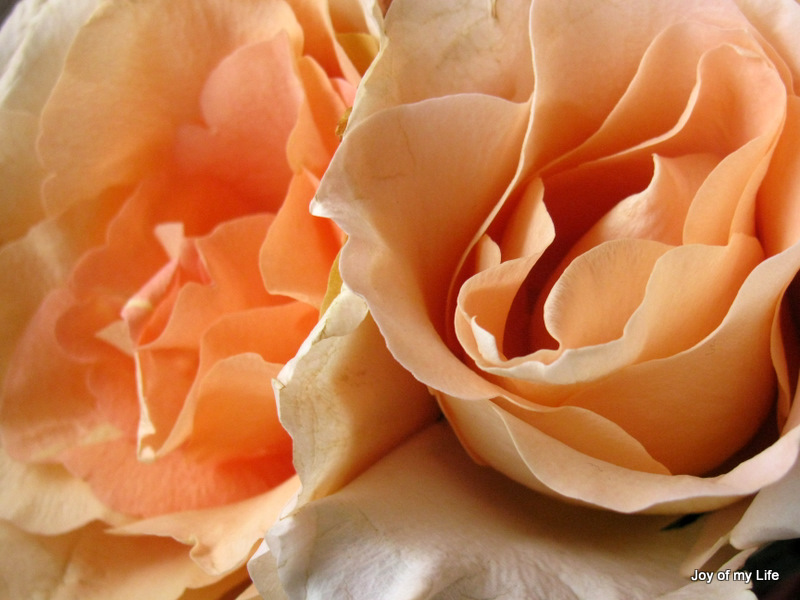
Our first spring daffodils have wilted in the garden, the tulips have already grown pale with dry brown edges and losing petals, the rose bushes are just waking up for the season, so no fresh flowers I supposed. But, knowing how cheerful flowers can be, a bunch of peach-colored roses and big hugs with "Happy Mother's Day, Mama!" greeted me.

A little box of soap roses and "Momu is Speshel" card - an independent venture Ana had secretly completed by scrounging some papers/cardboard from the recycle bin.


A couple of natural soaps from D, whose hand-made paper packages are embedded with seeds for planting (totally recycle-able, like the seed paper we make on and off) reminded me that spring planting season is well-past and am way behind. No matter.


I thought the day couldn't get any better.

But, it held one more surprise: a hike in LaTourell falls.


Fighting the rising guilt, I managed to tell myself that for 364½ days a year I give my attention and care freely and happily to the kids, sometimes not so patiently or gracefully, but usually sincerely and unconditionally. So it must be okay to walk alone, one with nature, about 10 feet ahead on the trail without worrying, just quietly entrusting the kids to their dad.

The slushy, slimy, puddle-ridden steep trail was quite tricky to navigate, but, it is an easy 2 mile hike that the kids can manage, and the view is breath-taking, not to mention the abundant wild flowers and the noisy yet well-camouflaged birds that make the heart leap with joy.


The highlight along the trail, besides the waterfall of course, was this "Snail Tree" - an oddly shaped tree that looks uncannily like a giant snail.


A quiet meal of Tomato Florentine soup, with Adai Dosai (weird combination, but the dosai served as a wonderful bread for dipping in the soup) followed by the usual bath-and-reading bedtime ritual rounded out the day.

I was grateful that I got to chat with my mom. The usual. Easily regressing to the little girl who kicked up a fuss about her two braids not being even and matching each other because Amma did not do it right, forgetting for those few minutes how Ana kicks up a fuss about not getting her hair-clips just so...

And after a good foot scrub, my tired feet were soaking in Epsom Salt bath (with peppermint oil) while my mind focused on the guided meditation (audio), trying not to think about those heavier thoughts that only a daughter-who-is-also-a-mother can knot herself up with.

Labels: ,

Thursday, May 05, 2011

Into the A, B, Sea: An Ocean Alphabet


Into the A, B, Sea: An Ocean Alphabet
by Deborah Lee Rose
illustrations by Steve Jenkins

Ages 0-4

Scholastic Press; 1st edition (September 1, 2000)

There are quite a few abecedary books featuring animals. Our all time favorite is Alphabeasts by master artist Wallace Edwards.

Steve Jenkins is no stranger in our house. His cut-paper collage work has inspired me enough to try a few with my kids. So, it was only a matter of time before I got down to sharing A, B, Sea here.

Swim the ocean waves with me
and dive into the A, B, Sea


Thus starts this oceanic adventure showcasing exquisite sea creatures using simple rhyming sentences. Not just large or cute creatures. There is the much-ignored Barnacles for B and the typically forgotten Zooplankton for Z, making this a useful book for discussing food chain and ecosystems of the sea.

Brief notes at the back of the book add some information about each of the animals.

There is always this irrepressible curiosity in me, even today, to see what is presented for some of my favorite letters - viz., Q, U, X and Z - especially X, in the alphabet books. I'll just have to leave it to you to find out what A, B, Sea offers. Suffice it to say I was eXpecting Xanthareel or even the ubiquitous X-ray fish and found something different.

One of the aspects that attracts me to animal books is the suggestion of movement, of dynamic activity and flux, without clobbering. A, B, Sea offers crisp and beautiful verbs for the animals: Manatees lumber, Rays swoop low, Dolphins spin. The spin part particularly caught our attention since we recently learnt about Spinner dolphins (Stenella longirostris) from A Whale of a Tale!(Cat in the Hat's Learning Library).

The illustrations are breathtaking as we've come to expect from Steve Jenkins' books.

All in all a visually stimulating, informative, delightful book that has scored repeat reads from the pre-schooler every night for over a week now, and has inspired the kindergartner to explore further.

[image source: paperbackswap.com]

Labels: , , , , , , ,

Karnavedham

Back in 2007, I had shared my then-current feelings on the subject of Karnavedham: Ear Piercing.

Finally, a recently-turned-six Ana smiles from ear-to-ear when trying on my assorted (huge) collection of ear rings!

From about 5½ or so, she started seriously asking for her ears to be pierced. No push from me at all - except the strategic display of (and unrestricted access to) all my fine ear adornments which I never wear anyway, having opted for the minimalistic look I've always preferred.

D considered it. He was happy to hear her ask for it. He let her talk to him about why she wants it and what she hopes to do once she gets her ears pierced. He sat with me and Ana when I shared my personal experiences with ear piercings. He waited till she pretty much pestered daily with, "When can I get my ears pierced?", "Can I get my ears pierced today?", "I wish I had my ears pierced already!"...

So, we decided it would be a present for her sixth birthday. She was aching for it so much, there was no doubt. Now, of course, not everything she aches for and nags about will get approval, but, this was something I had wanted for her a long time ago, so, I was more than ready. I was just waiting for D and Ana to be ready as well.

She was more than ready, of course. And terribly brave. Sat there still as a rock, hugging a softie for comfort while I was watching with clenched fists stuffed in my mouth.

So, that's finally done. Of course, it takes a while to care for it and make sure it heals and stays healthy and such. Plus, there is always the fear that some dangling earrings might get caught on something or get pulled inadvertently during horseplay... but, I grew up with it and my mom somehow didn't make a big deal about it other than to caution me. What more can a parent do? Well, other than not get the ears pierced at all, I mean...

Labels:

Wednesday, May 04, 2011

Read To Me Picture Book Challenge


Hurray for Books!

That's what came to Ana's mind when thinking about the message she wanted to put on one of her (many) hand-made bookmarks.

And, since we read a ton of books anyway, it seems like a fun thing to participate in the Read To Me: Picture Book Challenge hosted by There's A Book

We read quite a few books on a fairly regular basis -i.e., daily, sometimes reaching for old favorites, sometimes must-take-home new ones from the library. Well, "new" is a relative term.

So, I was leaning towards the challenge level: "Harvesting": 200 picture books with a child in a year.

I figured reading 200 picture books must be a cakewalk considering we've been doing close to that (possibly more) each year.

However, the fact is, out of every dozen books we read, only one or two resonate with the kids enough to urge me to share here in my blog.

Then, I got to thinking. Realistically, writing reviews for 200 picture books is not going to work out so well with the eternal rush this life has turned into, at least, not if I plan to stay sane.

And, if I don't write a review per book diligently, it is hard to keep track of the books we read and how it affected us for this Read To Me: Picture Book Challenge. (No cluster posts or listings for this challenge as far as I understand).

Also, since I subscribe to the If you have nothing nice to say, then don't say anything at all school of thought, I seldom share books that I didn't like. What's the point, right?

Plus, now that we are more into fantastic chapter books, reading picture books with Ana is getting fewer and far between... Og pretty much overcompensates with his obsession for books.

Therefore, a conservative challenge of "Watering": 36 picture books with a child from now till Dec 31, 2011, is the level I am settling on for now.

I can always change my mind, I am sure :)

Labels: , , ,

Monday, May 02, 2011

The Greedy Sparrow: An Armenian Tale

greedy sparrow armenian folktale lucine kasbarian maria zaikinaThe Greedy Sparrow: An Armenian Tale

retold by Lucine Kasbarian
illustrated by Maria Zaikina


Ages 4-8

Marshall Cavendish Children, April 2011

Folktales and fables from around the world have striking similarities in that they convey universal truth and wisdom, typically via animal protagonists, generously laced with humor. And yet, they differ in the presentation, drawing from cultural traditions of the people orally handing down these tales.

One of the Armenian folktales passed down through generations in the author's family orally is The Greedy Sparrow. The book dedication reads, To my forbears, great-grandmother, and father, all of whom preserved the sparrow fable through the ages. The great-grandmother mentioned is a celebrated storyteller from the Old Country.

I was delighted to get in touch with author/journalist Lucine Kasbarian a few weeks ago. As her website notes, the author is passionate about her ethnic Armenian heritage and enthusiastically shares it with the world.

The Greedy Sparrow is the first time English retelling of this tale in the children's picture book format. It starts with Once there was and was not a sparrow, which suggests that the tale may be real or imagined, we may never know.

A sparrow gets a thorn in his foot. He flies around and finds a kindly baker who removes the thorn and tosses it into her oven. The wily sparrow, instead of thanking her and moving on, comes back a while later and demands that he get his thorn back. Needless to say, the baker cannot give it back. Either you give me my thorn or you give me some bread demands the sparrow. And the baker has no choice but to give some bread.

The sparrow is not content. He goes about tricking and bartering item after item, including a new bride in the bargain, until he meets a minstrel with a lute. When the confounded minstrel has no choice but to hand over his lute, the sparrow seems contented. He starts singing the story, In place of a thorn, I got a bread. In place of a bread, I got a sheep... and so on till, ...I got a lute. And now I am a minstrel!

In all the gloating, he loses footing and ends up with a broken lute and a thorn in his foot. Back at Square One.

Trickery is not rewarded, especially when it takes advantage of the good nature of people who willingly help others. That message got cleverly (and clearly) conveyed to my six year old who pored over the illustrations with fascination, while reading the simple narration. She particularly like the speech bubbles, with red text reserved for the sparrow, which automatically made her change her voice and accent as she read aloud the sparrow's part in the narration.

Illustrator Maria Zaikina was approached to illustrate The Greedy Sparrow when the author and publisher viewed her Armenian folk animations on YouTube: http://www.youtube.com/watch?v=QJ5NAXT9pLs

The bold, vibrant folk-style illustrations complemented the story well, transporting us to a time and place that evokes nothing but simple unadulterated joy, and possibly nostalgia for a bygone era.

Ms.Zaikina's illustrations reminded me of my childhood favorite Ladushki, Ladushki - Russian Folk Rhymes and Tales For Little Ones illustrated by Yuri Vasnetsov and retold in English by Irina Zheleznova, a book vibrant with color and imagination, which to this day stirs warm memories when I share it with my children.

References to places in Armenia, the map and activities on author's website and the traditional attire shown in the illustrations gave us a jump start to explore the geography and culture further.

Here is an interview with the author, conducted by Tom Vartabedian, at Asbarez.com.

[Disclosure: I received a copy of this book from the author.]

[image source: Lucine Kasbarian's website]

[This post written for Saffron Tree]

Labels: , , , , , ,

Friday, April 29, 2011

Half Magic

half magic edward eager
Half Magic
by Edward Eager
illustrated by N.M. Bodecker

50th Anniversary edition

Ages 9-12, all ages

Published by: Harcourt Children's Books;(October 1, 2004)

Summer usually manages to exercise its magic on childhood. Long, lazy days, each opening with a promise of adventure, ending with dirt and grime getting scrubbed off in preparation for the next day... no very little structure, lots of fantasy... always thirsting for the thrill that's around the corner... idyllic.

These were the memories Edward Eager's Half Magic evoked in me as I read it to my six year old recently, while internally bemoaning the bygone days, wondering what sort of memories my children will accumulate of their summers.

A predictably dull summer vacation turns upside down for the siblings Jane, Mark, Katherine and Martha when Jane finds a nickel on the sidewalk. Or what she thought was a nickel - a coin, by accident. A simple concatenation of circumstances makes her realize that this coin grants wishes. Oh, but there is a catch. There is always a catch with magic. This particular coin only grants half the wish as the children find out through a few mis-wishes and lots of deduction and discussion.

To be fair, they decide to take turns. Only one can be in charge of the wishing for that day. And thus starts a series of mishaps and adventures. The children learn quickly enough to phrase their wishes carefully to outwit the magic and get what they want and not rustle up more trouble. Not an easy task considering there are rules and consequences to magic.

They manage to time travel to King Arthur's days and almost change history when they meddle with the life of Sir Launcelot. And that's where they learn (hopefully) to be more careful what they wish for.

After midway through the book, it gets a little predictable as the children have figured out to wish for twice as much as they want so the magic would do half of that and leave them with exactly what they want. But, that does not in any way affect our interest in the events that unfold.

Ana particularly liked the half-talking cat, wispy gossamer Martha, and of course Iphigenia aka She-who-was-no-longer-Jane. I liked Iphigenia part of the story as well, when Jane makes a terrible wish in a rush of emotion declaring she wished she belonged to another family. Of course, Jane doesn't get into the sort of ideal family she pictured she'd rather belong to and things go awry, but, therein lies the catch. One cannot have the cake and eat it too.

There is considerable drama in their real lives, even without the magical interludes. Their dislike for Miss. Bick, their suspicion of Mr. Smith, their mom's hectic life working at a newspaper, not to mention their own sibling quibbling, all add up to a wonderfully rich human dimension to this story. I particularly liked the fact that the children in Half Magic loved reading books.

A Harvard graduate, Edward Eager didn't set out to write children's books until he had a son. Apparently, not finding any good books to read to his child, he decided to write some of his own.

Half Magic was published in 1954. The language and the settings make it all the more charming. An excerpt from Chapter 1 is available here.

The caveat of course is that there are some minor aspects of the book that I believe do not fit today's world as the book was written over 50 years ago. Nothing major, nothing terribly offensive. With that in mind, I do some run-time edits as I read to my daughter.

After many chapter book series, mostly recent publications tailored for six year olds, be it realistic fiction or fantasy, I have been rediscovering some classics for us to read together. I was looking for something different, something with magic, something challenging for her blossoming language skills. And discovered E.Nesbit and Edward Eager. There are seven books by Edward Eager about children and magic. We are hoping to work our way through them all.


[image source: wired.com]

Labels: , , , , ,

Thursday, April 21, 2011

Kids Crafts: Felted Fairy Dolls (Waldorf-style)

Needle and Wet Felted Fairy dolls (Waldorf-style)

Last year, Nana initiated us into felting. I've made a few felted items on and off for hobby since then. Wet Felting as well as Needle Felting.

With a limited budget to splurge on crafts/arts supplies, it seems a bit out of my range to buy good quality wool for my felting projects. Thanks to Nana, I had a stash of beautiful soft merino wool roving in wonderful colors to start with. And, since Fabric Depot has sale on and off, I manage to find enough to fit my frugal allowance and my urge to create hand-made things for family and friends.

Anyway, Nana gave Ana a Waldorf-style wool doll she bought from her friend to aid in a fund-raising drive to save Amur Leopards. Ana liked it so much that we decided to make some for ourselves, hoping that if we got good enough at it, we would try to have our own fund-raising drive for causes dear to our hearts... but, that is a long dream. For now.

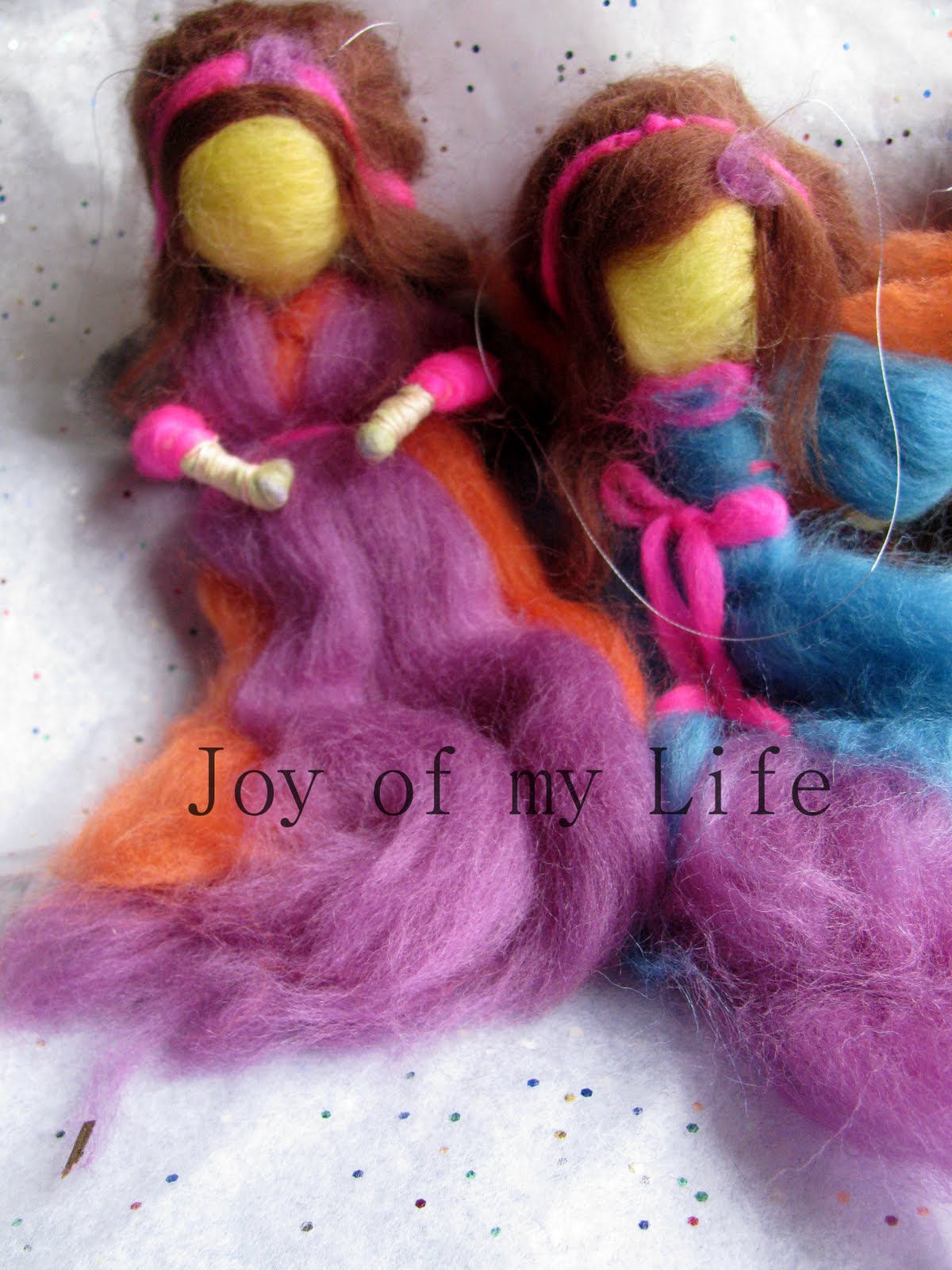
I made a few and let Ana watch. Then, when she felt ready, I let her help me make a couple. I still supervise Ana closely for needle-felting. The head is a needle-felted woolen ball. The rest of the doll is simply wrapping up wool roving and tying with wisps of wool or thread or ribbons.

wool roving felted fairy doll waldorf style

In Waldorf-style, we left the facial features out. It might feel a bit disconcerting for some, but, kids seem to accept it and appreciate it more easily, in general. I did add in the features for some later on to see if we liked it better.


If a few of the fairies look jaundiced, it's because the nearest color I had to flesh tone (dark or light) was this mild yellow wool roving. I didn't have undyed merino enough to custom dye it myself. After all, fairies (and people) come in all colors, so I wasn't too concerned.

The best part for Ana was of course the hair. It had to be long. Really long. And have some hair accessories.

waldorf doll fairy felted hand-made

We named each of the fairies. This is Gwanwyn, the Springtime fairy. She makes sure blossoms bloom in spring time. She loves to visit the gardens everywhere. You might find her in yours if you time it just right!

Kids Crafts: Felted Fairy Dolls (Waldorf-style)

Here is Gwanwyn with bright eyes and a wide smile.

Needle and Wet Felted Fairies (Waldorf-style)

Here's Grisial, the Crystal Fairy (blue). She makes sure rocks have sparkling quartz and chalcedony inside, making the geodes special for anyone who finds them. And, Berl, the Gemstone Fairy (orange). She watches over minerals and other rocks that humans like to make into jewelry.

wool roving needle felted Fairy Dolls

Of course, a fairy is not a fairy unless she has wings. So, I wet-felted just a couple of layers of wool and cut it into wings and needle-felted it in place.

For some of them, I used Pipe Cleaner (Chenille stem) skeleton to build around, especially if I wanted posable arms. Others seem more like scarecrow with no support structure inside and just wool roving tied up to represent long fluffy sleeves.

Kids Crafts: Felted Fairy Dolls (Waldorf-style)

Labels: ,

Tuesday, April 19, 2011

Happy 6th, Little Girl!

Mama, can I have a sleepover for my birthday?
Ummm... let me think about it. OK?
...
Have you thought about it yet, Mama?
Yes, I have. I think we should have the sleepover when you are a little older.


She did get to have a picnic playtime with her friends to celebrate her special day. And, as always, a quiet yet beautiful Birthday Walk celebration in school where we got to share little tidbits about Ana with her friends and listen to their stories about Ana as well. A wonderful, no fuss birthday with friends and family.


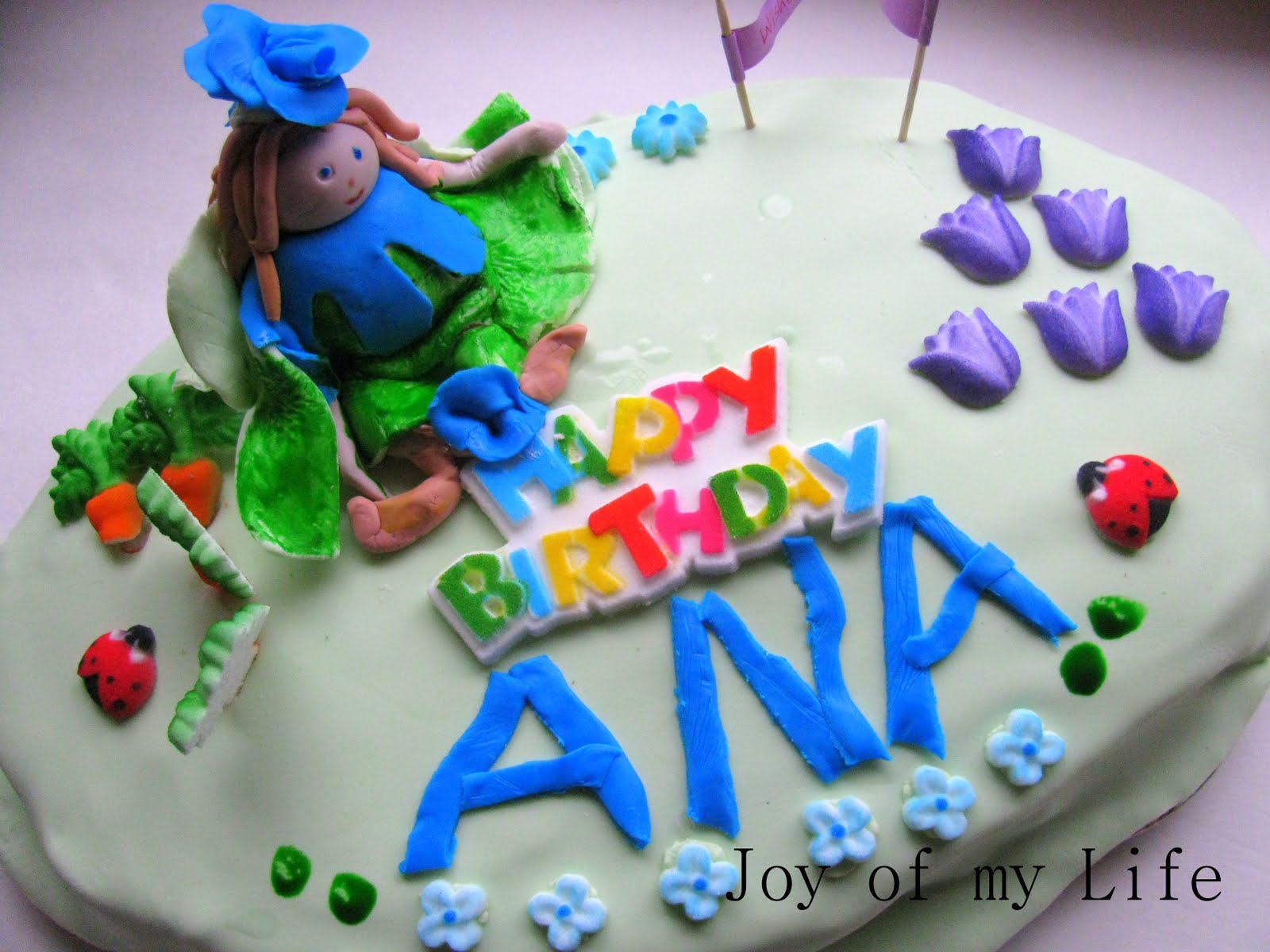
The night before her birthday, while she was sleeping, the Garden Fairies helped me make a cake for Ana. One of them posed for the fondant fairy decoration I was wrestling with. A few others helped place the sugar flowers in the Spring Garden cake: regular white cake recipe with some dark cocoa powder and Ovaltine™ made the earth/soil part of the cake; white rolled fondant tinted with light spring green for pasture; flower sugars and carrots gave it a thriving fullness, with the fondant fairy watching over it all.

Of course, I let the fondant fairy set overnight on a plate as the cake wasn't ready. And she froze in position. It got very tricky prying her out to place her on the cake, and that's when the unfortunate accident happened. She lost her lovely long legs and part of her wings. So, rather than stretching out her legs and beaming benevolently as she did in my head, the fondant fairy ended up with an inscrutable expression and prosthetic limbs.

However, the blue fondant rose I made for her head cheered up the delectable fairy a bit. And she set up a banner on the cake that read, "Wishes come true... when you are happy."

She was very edible though, despite her misfortune. Not for me, I don't care for fondant despite an inch of buttercream layer under it. But, the kids seem to like it. And considering I make cakes about two or three times a year, it isn't too bad.


The Garden Fairies refused to wave their magic wand, sprinkle some fairy dust and magically fix the cake to match what I had in my mind. No matter.

They did bring some fresh flowers and left a note with it for Ana, in their teeny tiny handwriting which I had to read with a magnifying glass.

Labels: ,

Friday, April 08, 2011

Eloise: The Ultimate Edition


Eloise : The Ultimate Edition
by Kay Thompson
drawings by Hilary Knight

Ages 4-8

Hardcover: 304 pages

Publisher: Simon & Schuster Children's Publishing (October 1, 2000)

Published in the 1950s, Eloise books were probably not quite intended as children's books, even though they were centered around a six-year-old girl.

Modern publishers (and parents) are possibly more leery, tending to err on the side of caution when it comes to books targeted for children. As noted in Eloise's Timeline, the character came about quite by accident and unwittingly grew into what we know of her today, with some changes along the way.

Eloise is a city child. She lives at The Plaza Hotel in New York City. She has a nanny who is rawther British ordering her to bawths; she also has a dog Weenie who looks more like a cat, and a turtle Skipperdee. Her father is not in the picture at all, and her mother seems to be sort of a socialite traveler, usually on the periphery.

Eloise is precocious. Which could seem like a cry for attention if one wants to indulge in armchair psychology. But, she is a fictional character, so we just take her for what she is and not read too much into the parenting style or behavioral dysfunction.

Ana read the whole Eloise: The Ultimate Edition, a collection of four books: The Absolutely Essential Eloise, Eloise in Paris, Eloise at Christmastime, Eloise in Moscow.

I didn't. I gave up after two books. There are no full stops at the end of the sentences. Perhaps that didn't bother me as I rather like free verse. But, after a while, the antics got a bit tiresome for my jaded middle-aged mommy brain.

However, I did notice Eloise's effervescence, passion, independence, and imagination. It's hard not to like a girl who says, Here is who my absolute best friend in this whole wide world is: Nanny.

It must be something about the first person narration, the drawings (which are quite funny), Eloise's rather unique lifestyle, and the sometimes-outrageous situations, that kept Ana reading on till finish. At least that's what I gathered from my conversations with her about this volume. "Ello-ees is silly, Mama! She does things she is not supposed to, disturbing people, making trouble... but she has SO much fun!"

Of course, the style of language is quite different from what she has been exposed to, so, Ana didn't quite comprehend every little incident/detail of her adventures, but she kept feeling drawn to it and continued to read it every night, even during commutes, dutifully placing her hand-made bookmark to save the place for next reading session. I think it was the drawings that kept her entertained throughout.

Here's what you have to take if you're going to Paris France
Mary Jane button hooks
Pliers
Consommé container
Hotel kit

Here's what else you have to take
Everything


I thought Eloise in Paris would be Ana's favorite in this collection. It was my favorite. The French phrases, the landmarks in Paris, and the fact that You have to be content with everything in France for instance if you want a jelly bean you can have almond paste instead or if you want the sun you can have pluie and suchlike made it entertaining for me.

It turns out that Eloise at Christmastime is Ana's favorite. "Ello-ees stands in a bucket with Christmas lights wrapped on her and a crown on her head and a candy cane in her hand, Mama!"

For when you are a child of six
it's difficult to know
if you deserve a present or not
at Christmas time or so


And, naturally, Eloise being Eloise, she says, I always hang a two legged Christmas stocking just in case

I borrowed it on a whim, having not read it at all before. I am glad I did. Eloise is the new er.. old Junie B. in Ana's life.

Labels: , , ,

Wednesday, April 06, 2011

A Book of Sleep


A Book of Sleep (Hardcover)
Il Sung Na

Ages 4-8

Publisher: Knopf Books for Young Readers (September 8, 2009)

Since owls are the rage these days, we've been reading quite a few owl books. Not many resonated with us. Il Sung Na's A Book of Sleep, however, had me inspecting and admiring each double-page spread with wonder and delight that surpassed the resident 3-yr-old's.

The text is rather straightforward and simple. There is no real story that unfolds in the book. It reminded me of Taro Gomi's Everyone Poops. The pictures describe the text, or vice versa, not sure which came first for this book, first published in England under the title ZZzzz: A Book of Sleep (2007).

When the sky grows dark
and the moon glows bright
everyone goes to sleep...
except for the watchful owl.


The owl watches as the other animals get their night's rest. Some sleep standing up, some sleep with one eye open, some with both eyes open, some sleep alone, some huddle together...

However, when the sun comes up again in the morning, all the animals wake up... except for the tired owl. "Silly owl! Why does he do that, Mama? Why does he like to sleep in the morning and wake up at night?", has been Oggie's question for every owl book we've read so far that mention their nocturnal behavior. (Owl Babies, Good-night, Owl!, Stellaluna to name a few).

At the risk of sounding like a broken record, Na's illustrations are incredibly beautiful and quite stunning! The colors, the design, the animals, everything about them makes my heart leap with joy. The kindergartner and the preschooler at home like this book, of course. But, I am the one gazing at the pages whenever I get a chance.

There is a board book version, which, while still gorgeous, somehow impairs the gratification I get from the full-sized hardcover.

Il Sung Na's page has samples of her sketches and some images from this book, along with information about her other books.


[image source: amazon.com]

Labels: , , , , , ,

Saturday, April 02, 2011

I Broke My Trunk


I Broke My Trunk
by Mo Willems

When I heard, "Mama! You have to read this! This is so funny!", followed by "Can we take it home? I can read it to Og, he will find it very silly", there was no room for any counter-thoughts for me, and so we promptly borrowed it from the library.

Willems' Pigeon somehow did not hit off well with the kids. However, his Elephant and Piggie seem to tickle them silly. I Broke My Trunk happens to be the current favorite in the series.

With simple illustrations that convey not just the story but also the characters' feelings, along with spare text for early readers, Willems' books seem to resonate with the kids.

Gerald broke his trunk. Piggie wants to know how he broke it. Gerald says it's a long and crazy story. And shares it in the typical way that mimics how children usually communicate.

Gerald: Then, I had an idea! I wanted to lift Hippo onto my trunk!
Piggie: Why?
Gerald: Because!
Piggie: Okay.


But, no, it is not Hippo, or Hippo's big sister (really BIG sister), or Rhino, or all of them plus the piano that broke his trunk. It sure is a long and crazy story, and in the end, Piggie might have a long and crazy story of her own to share.

When the recently-turned-3 year old asked, "Mama, why is the Pigeon here in the Elephant book?", I was glad he noticed Pigeon's visit and made some sort of connection between them.

[image source: Pigeon Presents!]

Labels: , , , ,

Newer›  ‹Older