Sunday, January 19, 2014

Making Monsters for fun!

drawing monsters kids art usborne


Usborne's 365 Things to Make and Do is a favorite at home, along with Usborne Book of Art Ideas. On and off the older child and I would pore over some of the pages to find inspiration, or even to simply do what the book has shown.

One fine weekend, the younger child got inducted into this Flip through Usborne Book for Inspiration club, quite by accident. I had left the book open to a particular page (possibly intentionally!) on the table, and left some sheets of white paper and markers strategically next to it.

After exhausting all other ways to engage himself while I was busy with my work (which was mostly just pretending to be unavailable so he won't monopolize my time), the kid started doing what was suggested on the open page: draw circle monsters and jelly bean monsters.


drawing monsters kids art usborne


A whole beautiful afternoon was spent in this activity with no interference from me. "Look, Mama, this one's upside down on a skateboard", "This one's brain is sticking out of its head!", "This one looks like Saltwater Taffy", "He has 3 mouths, see? One is for talking, one is for breathing, one is for eating", "This one is sad because he lost his feet and fingers"...

I was quietly smiling, pretending not to register the non-stop chatter as he made up the drawings, with my ears perked up and dutifully jotting some of them down so I can share it with Papa.

My favorite was the little army of monsters marching along at the bottom of the page.

drawing monsters kids art usborne


All in all, a fun afternoon for me, without having to do any work. And, from the looks of it, a fun afternoon for the kid as well...

...Until he flipped the pages and landed on the "Blow-paint Monsters" in the book, and wanted to do them next.


Labels: , ,

Thursday, December 12, 2013

A Book About Design

Very few books appeal equally to the 8 and the 5 year old these days. The older one is into fiction primarily and is going through this scare phase, curling up with anything from Mary Downing Hahn's ghost stories to Haunted America by M.Norman and, of course, good old Goosebumps. The younger one is a non-fiction fanatic, choosing books in his current topic of interest as we go along.

So, unless it is a toddler/pre-schooler favorite that they've both enjoyed being read to by an obsessed mom, it is unlikely that they'd have an extended book discussion at this stage...

And then, every once in a while a book comes along that knock them both off their boots, making me grin widely. The set of three books here by Mark Gonyea, (who has become a household name over the last couple of weeks), has been read multiple times with full gusto.


A Book About Design: Complicated Doesn't Make It Good
by Mark Gonyea

This book inspired the 8 year old to try out every concept from the ten chapters.

Be it the cardinal ratio 1:3:9 or the receding cool colors, or the relative sizes for emphasis, Gonyea manages to get the point across with a few chosen words and a fantastic visual to go with it.

The simplicity of uncluttered design comes across loud and clear in this book.

The 5 yo simply loved reading it over and over, picking up vocabulary, and comparing the cover image with the one inside of a similar nature.


Another Book About Design: Complicated Doesn't Make It Bad 
by Mark Gonyea


Following up on the previous book, Gonyea has managed to bring across a few more interesting concepts in design.

Starting with the big picture, it is nice to see how adding details changes the design. Foreground and background, negative and positive space are clearly shown. Yes, shown. W

ith minimal words, and bold visuals, Gonyea has managed to show some tough concepts in visual art design.

Sometimes sequels fall flat, seem weaker, but not in this case. After convincing us that complicated does not mean good in the previous book, he has set out to convince us that complicated isn't bad either.

That's the beauty of design.


A Book About Color: A Clear and Simple Guide for Young Artists 
by Mark Gonyea

Starting with "Welcome to the Neighborhood", Gonyea introduces the Color Street with 6 houses - violet, blue, green, yellow, orange, red. Then goes on to talk about primary colors and secondary colors.

Since most pre-schoolers know about primary and secondary colors anyway,  we don't have to stop here. The book talks about saturation, hues, color wheel, and the fact that cool colors recede and warm colors stand out, and projecting moods via bright bold colors and muted pastels.

Each chapter focuses on one aspect of color theory. One curious thing that the 5 year old noticed: Whereas he expected the intro page of each chapter to go by the 6 colors of the color street, not all were represented and not all that were represented were in the order presented at the beginning. Such perceived inconsistencies tends to catch his attention...


All in all, three awesome books for all ages about design and color principles.

[image source: macmillan]
[author website: markgonyea.com]

Labels: , , , , , , , ,

Sunday, July 29, 2012

Kids Art: Suminagashi


Our library had a fun art event for kids: Suminagashi, Japanese art of marbling with inks.


As Ana and I were there early enough we helped the instructor set up the stations. A dish of water about 1 inch deep, some inks, brushes, combs, rags, and papers. 


For an hour or so, we experimented with the designs. First the abstract ones, as we have done before with Shaving Cream and Cornstarch marbling at home. 


But then, it got interesting for us as the instructor gave us a book to follow specific techniques to create detailed patterns.


Needless to say, we did not make much headway with specific designs even with the book open to guide is. Which gave us a deep respect for artists who can create the intricate designs, repeatedly, with precision.


We made as many prints as we wanted and brought them home. As we had experienced before, watercolor paper didn't work as well as thinner butcher paper, smooth shiny paper, and card stock.

We did a few traditional colors with black and red like in the book.


And then just used the available colors trying various techniques like using a strand of hair for design, or the comb, or the back of the paintbrush (instead of a stylus), flicking paint in for the spotted look or making concentric rings...


Labels: , , ,

Thursday, June 16, 2011

Bye-bye Kindergarten

When I was growing up, "Graduation" was a term reserved for when one first earned one's college degree. There was usually some sort of convocation ceremony to recognize the achievement, and justified pomp and splendor around the awarding of the degree certificate. I got all of my four degree certificates by mail, being chronically shy to don the traditional vestments and walk up in front of strangers when my name was called.

I got to thinking about these as Ana geared up for her mini rite-of-passage-of-sorts getting out of the comfortable shelter of her Montessori pre-school at her recent kindergarten graduation. I like that while it is a solemn ceremony, very affirmative and inspiring, it also serves to reiterate the fact the learning is ongoing; and as they transition to different environments, setting goals and working to achieve them, whatever they may be, the children can look back on all that they have achieved so far, without even knowing they did, absorbing and developing their innate abilities in a rich and conducive atmosphere.

Update: had to add this here for my reference - a direct quote from utbtkids who usually manages to say things that are bouncing around as disjointed thoughts in my head:
"Getting to say proper goodbye, however painful it is, is an absolute necessity, especially for children. They learn that their old friends did not just vanish, but are still there and it gives them the confidence to make new friends in the new environment."
That was what the KG graduation was about, for me and for Ana, and for the handful of kids who are moving on.

To acknowledge and validate their feelings - after spending 3+ years with the same teacher, friends, environment, and then to suddenly feel booted out into a new one - can be tough, at least for some kids, as was evident in the strange behaviors noted during the last few weeks of school. While there was an ongoing addressing of it in classroom, the ceremony gave a sort of closure.

Each child is different... I have a feeling Oggie will handle it differently from Ana, being an extrovert of sorts from what I've observed so far. Ana, on the other hand, being shy and withdrawn, doesn't embrace change as easily. Added to it is the fact that, thanks to my non-social nature, all she has known is school and home as safe havens, nothing much else...


The graduating kindergartners write a book about themselves. I was quite surprised to see that among the other things she had written about herself, Ana had the only thing she didn't like: "I don't like getting hurt." That's it. The only thing she doesn't like is getting hurt. That spoke to me on many levels - her shyness, which much like mine, seems more about getting the feelings hurt than actually being scared of the people. Of course, she probably only meant physical hurt, but, having heard her state clearly, "that hurt my feelings" appropriately, I believe she knows what she is talking about...

The teacher then says a few words briefly and directly to each child as they come up after their Bubble Walk, sharing the moments they want to highlight in the child's life at school. It is a sweet ceremony, ending with a tear-jerker of a song.

One of the traditions of graduating kindergartners is the Self-Portrait. It is a guided process, but entirely done by kids.

They look in the mirror, study themselves, sketch, erase, sketch, edit, sketch on black paper till they are satisfied.

Then they use glue for the outline much like the Glue and Chalk Pastel art project we've shared here before. The results are stunning. And, it always amazes me to see how the children see themselves, the details they notice in themselves.

A fascinating "experiment" as Oregon's Poet Laureate Paulann Petersen referred to it in an NPR interview, is the system of public education. Used to be that only the privileged few could get an education as it was expensive and beyond easy reach. But, the fact that education is open and available for all who wish to avail of the opportunity was the biggest thing that impressed me when I heard about it as a fresh graduate doing internship teaching High School Physics in India to kids who were not much younger than me.

Today, it pains me to see many kids dropping out of school, the funding for public school system in jeopardy, the spiraling issues as a result... And, now that Ana is out of a non-profit private pre-school, gearing up for stepping into the public school system, I feel the gap, I feel the inadequacy, I feel the need to provide her with an environment that lets her learn at her own pace, getting a joyful education fit for future leaders of our world. I am digressing...

In the larger scheme of things, KG is KG - I remember LKG and UKG (Lower/Upper KG) when I was little, and by 1st standard kids were taught cursive writing, but not much reading... so, I am grateful that Ana is coming out of KG a confident reader favoring chapter books even if her penmanship is not anywhere near perfect...

When Ana gets her first college degree, I guess I'll truly feel comfortable saying "Ana graduated!", but for now, it is Bye-bye KG, Hello First Grade!

Happy Summer!

Labels: , ,

Thursday, June 09, 2011

Getting to Know Georgia O'Keeffe


The name Georgia O'Keeffe is probably not unfamiliar to many today. Her large arresting flowers in bold colors and immaculate detail is what my mind has come to associate with the name, along with a few now-famous bones.

For the kindergartner in residence, I thought it would be educational and fun to gather a few related books on a chosen topic and read them one after another (interspersed with other books, over a couple of weeks) to make it a sort of study without any pressure or expectation.

And to keep things interesting, I don't tell her the topic in advance. I borrow the books from the library, wait till the short-listed few on a topic are handy, then release them one at a time for Ana to read.

It is a joy to see her connect the related books and point out similarities among them and extract a few essential things from each to form a comprehensive picture.

There are no doubt many wonderful books on any given topic and knowing which ones to choose for the study is not easy. But I don't sweat over it. This is not an end-of-term research paper. This is more to introduce the fact that many books can present the same person/place/thing/animal and yet have an array of information to offer. And, also to reinforce the fact that different books on the same subject do in fact have some common core information.

One such recent study was artist Georgia O'Keeffe.


My Name Is Georgia: A Portrait by Jeanette Winter
by Jeanette Winter

We started with My Name is Georgia. The title was arresting enough and caught Ana's attention.

The book has bold illustrations and simple text. It presents Georgia's life in a condensed and compact way, highlighting her birth, childhood and later years.

But, unlike typical biographies, by selectively quoting Georgia's words directly, the book turns into a first person narration letting us see how the artist saw things. There is an indication of time passing and Georgia growing.

She painted small things large so people would notice them
. This stuck in our head. The book might not be quite engaging in and of its own for the typical picture book audience but it certainly started us off on a good path.


Georgia's Bones
by Jen Bryant
illustrated by Bethanne Anderson

Then, a few days later, she noticed Georgia's Bones strategically placed on her car seat on the ride from school. As she read it, she pointed out, "These are the same bones from that other book, Mama! Is she the same Georgia? She looks different in this book..." Sure enough, this opened up a new door for us to talk about.

The illustrations are beautiful in this book. The double-page with the huge Ram's Head caught Ana's attention.

Text is simple enough for elementary level, combining quotations and third person narration, but is packed with poetry. Talking about Georgia's fascination for bones that she collects from the desert
She didn't know why they pleased her so.
Perhaps it was the quiet way they did their work - the years of being invisible, and then, when everything fell away, they appeared, pure and beautiful.

The book again reinforced a handful of facts about the artist's life. It also brings out the artist's attraction to natural and everyday objects in which she found shapes, and she viewed them in unusual ways.
In the woods around her father's Wisconsin farm, she collected shapes: flowers, leaves, sticks and stones. She put them in her pocket and took them home.
"Such common objects," said her brother.
"Why do you bother?" asked her sister.
"Because they please me," Georgia replied.

However, it also showed how Georgia looked at things differently.
The holes in the bones pleased Georgia, too.
They made frames and windows through which she glimpsed a piece of the sky,
or a tiny corner of a mountain.

The book ends with Georgia painting the bones in her New York City studio.


Through Georgia's Eyes
by Rachel Victoria Rodriguez
illustrated by Julie Paschkis
Then came Through Georgia's Eyes, which sneaked into the stack of few books Ana had chosen to read at bedtime one night.

Again, she wondered why Georgia looked different in the pictures in this book, compared to the other two. She noticed that the book talks about the same yearning Georgia has for the wide open spaces, the same night sky she sees over open desert, the same determination at 12 when she declares 'I want to be an artist', and the attraction for common objects around her.
Season melts into season on her family farm. Georgia struggles to show on paper what she sees. At twelve she takes painting lessons. She tells her friend, "I am going to be an artist."

This book is in third person narration. The illustrations are beautiful. Ana particularly liked the double-page spread that shows people flitting like butterflies over gigantic flowers that Georgia paints.
Flowers delight her. She paints them as giants. People stop to stare. Georgia's flowers make them feel like tiny butterflies, flitting through the universe of her garden.

The book closes with an invitation to the readers.
Open your eyes...
...and walk along.
See the colors? Hear the shapes singing?
No need to hurry.
Lean in... look closer.


Presenting a biography, knowing which aspects of the illustrious life to showcase, and to do it in a short picture book format sounds like a Herculean task. But the three biographies above (regardless of how accurate they are historically) gave us a good picture of the artist, the person.


Georgia O'Keeffe Museum
Highlights From The Collection
by Barbara Buhler Lynes

To seal it, we looked at the reprints in Georgia O'Keeffe Museum, Highlights From The Collection at the Santa Fe Museum.


Finally, inspired by all that we've read, we did an art project.

Bones, or Landscape, or Flowers? Which one shall we choose?

We settled on flowers.

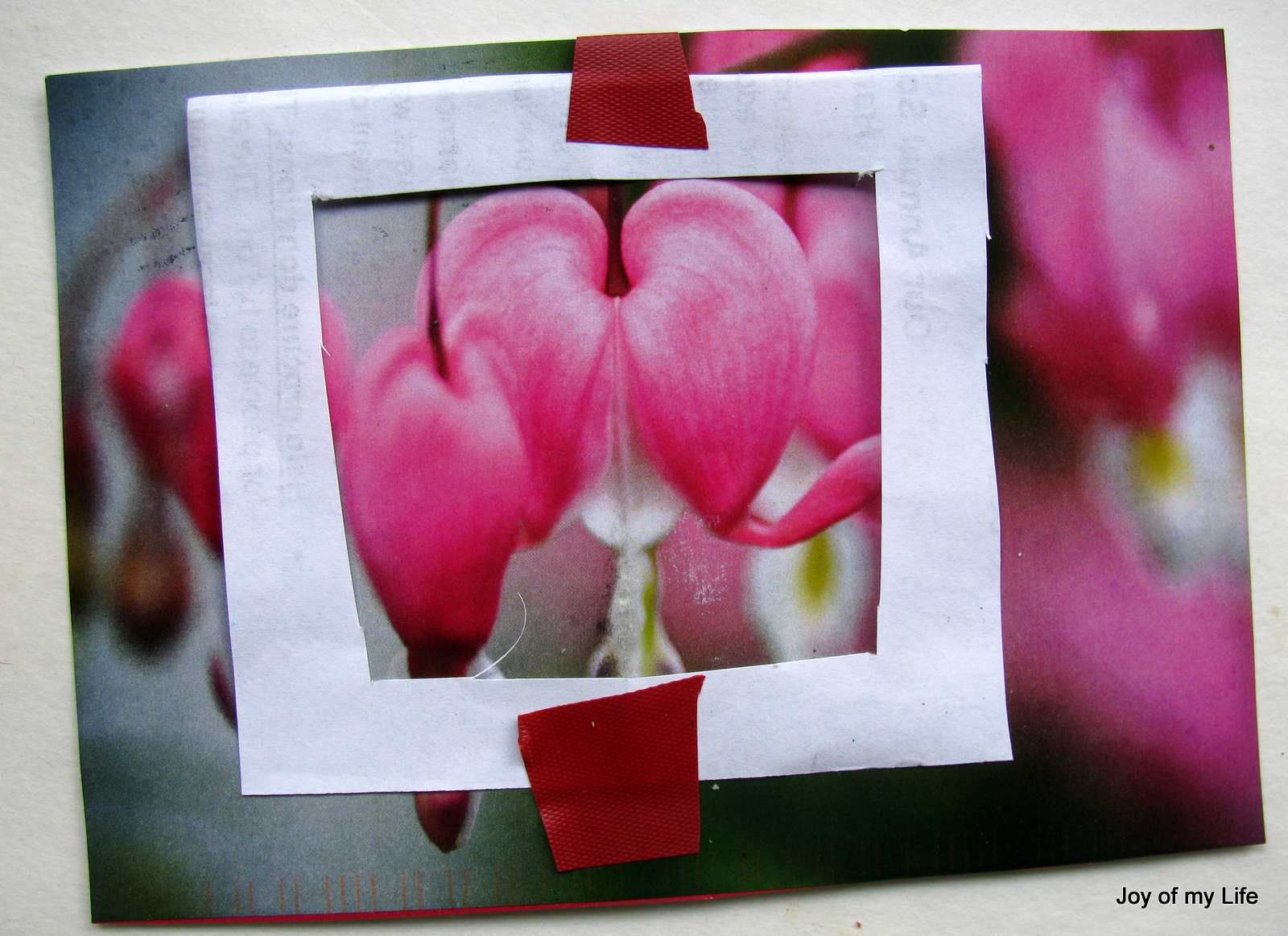
I found an old photograph of the Bleeding Hearts in our garden. I created a small frame to focus on just the details of one flower.


And we sat down side by side. Studied the shapes, light, colors within the small frame. Then, Ana tried her hand at representing what she saw using shapes and color pencils.


[Disclaimer: I am not an artist. I don't even pretend to be one. I am fascinated by artists and creative souls in general. And, I do a lot of art exploration projects with my kids in the hope of educating not just my kids, but myself as well.]

[image sources: goodreads.com, author Jen Bryant's website, author Rachel Rodriguez website, amazon.com, wikipedia]

Labels: , , , , , , , ,

Saturday, May 21, 2011

3-D ABC: A Sculptural Alphabet

3-D ABC: A Sculptural Alphabet by Bob Raczka
3-D ABC: A Sculptural Alphabet
by Bob Raczka

Ages 4-8, All Ages

Publisher: Lerner Publishing (2007)


Despite the 'ABC' in the title, this is not an abecedary book in the ordinary sense. Bob Raczka has brought many great works of art to his readers via the Art Adventures series. In this book, he shows us specific much-recognized works while describing in few simple statements what a sculpture is. Tying it to a letter from the alphabet in each page is incidental, but, elegantly done.

Starting with 'A', we learn that, A sculpture is not always something you can recognize. This kind of sculpture is called abstract, with Obus by Alexander Calder as the accompanying art work.

Each page has a visually stimulating arrangement of art and text, with well-chosen words that helps us understand a little more about this art form.

On the page with Carved American Eagle by John Bellamy, we read the expected E is for Eagle, but also learn that it is a relief: This sculpture can be looked at from just one side. It's called a Relief.

The one that fascinated Og the most was Spoonbridge and Cherry by Claes Oldenburg and Coosje van Bruggen, along with "upside down hanging piano" coming a close second - Concert For Anarchy by Rebecca Horn.

As Raczka notes, "A sculpture can mean different things to different people, or it can mean different things to the same person on different days, because the more you look at a sculpture, the more you see." Thus the author encourages the kids to view and appreciate sculpture without the pre-determined notion of what a sculpture should or does represent.

I learnt about not just sculptures, but also about forms of expression, and it inspired me to look up more about at least these 26 works of art that the author has presented in the book.

Aside: While I am not for age-banding, I do provide publisher's suggested age range for easy sorting/grouping/searching. This book is truly for all ages, especially if one is curious about contemporary art.

[image source: Lerner Books]

Labels: , , , , , ,

‹Older